
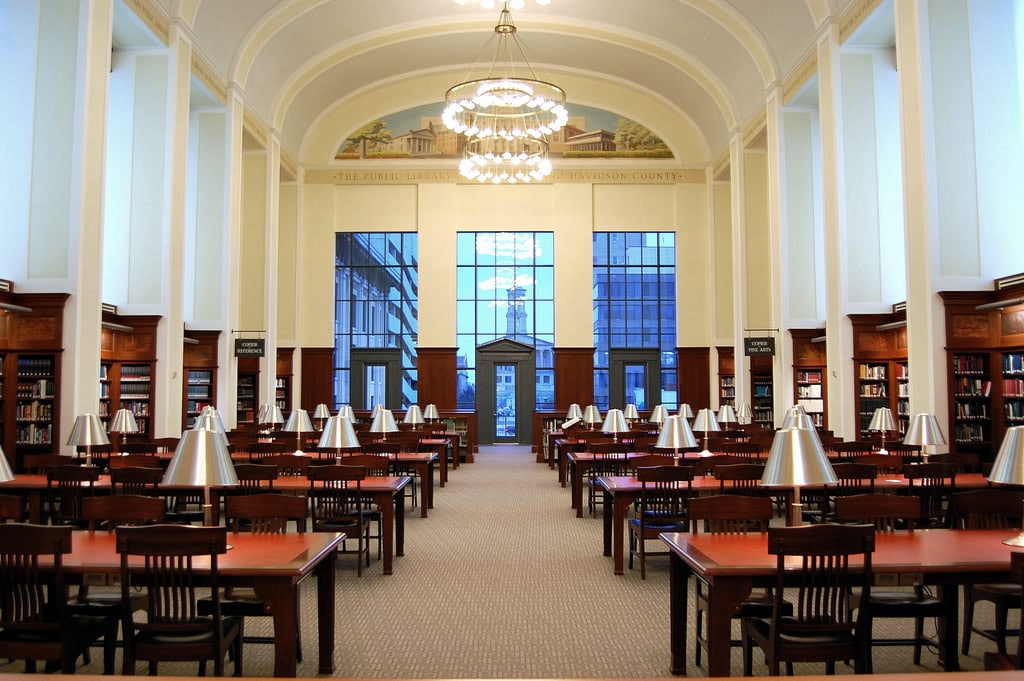
With information literally in our pockets and available at the touch of a finger, the role of the public library is changing. Though it was once feared the the Internet would lead to the decline of the library as we know it, new library design in the digital age is proving the physical locations of community libraries can thrive for many years to come.
For a library to survive and thrive, it must be more than just a home for books; it’s a living space that should serve as a vibrant community center and a place for digital content discovery and exploration. Libraries today are redefining their roles within the community while still striving to maintain a creative, welcoming space that encourages the values of reading and learning. Here’s a look at some new library design trends that address the library’s changing role in American communities:
Emphasis on Space for Connecting
New library design places more emphasis on spaces for people to connect than for shelving and book storage. Creating collaboration spaces, conversation areas with soft seating (and browsable collections put within arms reach), audio visual rooms with big screens, coffee shops and internet cafes are some of the ways libraries are offering their patrons spaces for engagement.
Inviting Atmospheres
Attractive furnishings, well-chosen colors and appropriate lighting are essential. Even simple changes in these areas can have huge impact. Sustainable principles of daylighting and indoor air quality have also become key factors to an inviting atmosphere. New library design favors open space with few walls while maintaining some quiet spaces. Create a friendly place where people want to be.
RIP Big Front Desk
The big front counter is no longer the focal point of the library. Large service desks are being replaced by self-service machines that provide fast and convenient access for check outs. Small service kiosks that encourage interaction are another alternative to the big front desk. The demise of the library counter also frees up staff to spend more time with library users and organize community engagement events.
Flexible, Multipurpose Spaces
Flexibility enhances functionality; flexible spaces can grow and change on a daily basis to fit ever-changing needs. Flex meeting spaces that vary in size, function, flexibility and capability can be adapted for years without significant financial investment. Multi-functional zoned children’s spaces will foster youth development at all ages.
Community Involvement
Invite the community to participate early in the planning process. Community input can help the planning committee understand the community’s needs for today and tomorrow, while opening the way for potentially innovative ideas to surface. And, as a result of the increased participation, the community members will feel more a sense of ownership.
See some beautifully designed and inspiring libraries on our Pinterest board!
GIO brings you a carefully curated selection of tile and stone products developed expressly for your commercial design projects. Our looks cover a range of styles to transform commercial spaces. From retail and restaurants to hospitals and hospitality, we’ve assembled an assortment of collections in styles befitting the gamut of spaces you may be called to design.